Management presents Insights
Insights is a series of interviews between prominent curators and artists, shining a spotlight onto practices that are not frequently present in New York City. With each interview, collectors have an opportunity to acquire works from a curated selection presented in the context of an expansive overview of an artist's practice.
For the first edition of Insights, Jeanette Bisschops interviews Monica Mirabile.
Jeanette Bisschops is an independent Dutch curator and writer residing between New York and Amsterdam. She holds a Master’s in Psychology from Maastricht University and a Master’s in Art History from the University of Amsterdam. She was Curatorial Fellow at the New Museum, New York between 2019 and 2022 where she worked on the New Museum Triennial 2021, and served as Curatorial Assistant for Time-Based Media at the Stedelijk Museum Amsterdam between 2016-2019. Interested in how artists' practices are challenging our social imagination, this interview is part of her ongoing research on the multiple roles and lives of performance.
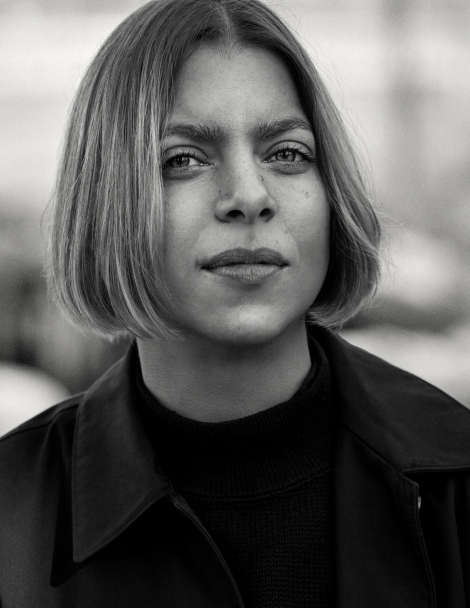
Monica Mirabile (b.1988, Clearwater, Florida, USA) is an artist based in NYC. Mirabile’s works negotiate relationships to power, support, and spirit through a composition of practices, including painting, sound, choreography, performance, scenography, and pedagogy. Her choreographic work presents performance as behavior, exploring the relationship between the structures of society, family, and the nervous system. After a hiatus of 15 years, she returned to painting in 2020 as a way to honor the complexity of grief.
Mirabile is also one half of the performance duo Fluct and co-founder of ‘THIS IS A PERFORMANCE school’. She has performed and exhibited at the Guggenheim, The Broad Museum, PS1, Miami Art Basel, 3hd, NADA, Performa, the Queens Museum among others. She has worked with musicians including SOPHIE, Blood Orange, Yaeji, Eartheater, Mitski & Maggie Rogers, and her work was acquired into The Whitney's permanent collection in 2017. In addition, Mirabile founded Otion Front Studio (est. 2013), a performance community rehearsal space in Brooklyn, New York, and currently organizes the Open Movement program at Performance Space New York in the East Village.
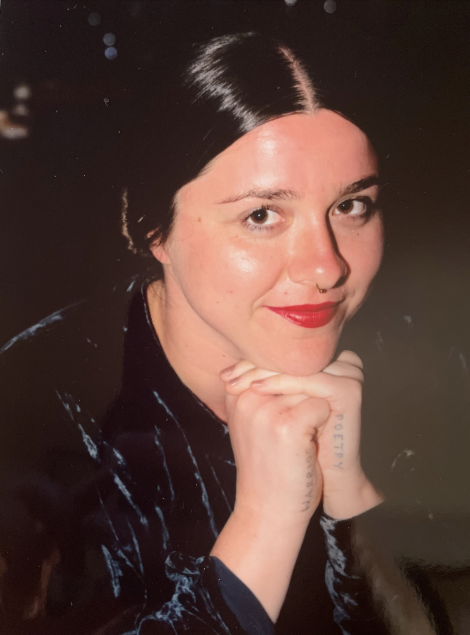
When I was invited by Management to interview an artist, I knew it had to be Monica Mirabile. Mirabile not only is a prolific performance artist, movement director, and—more recently—painter, she has been of singular importance to the performance community in New York. Championing her own practice and development as much as those around her, Monica is at the forefront of expanding the social dimensions of what it means to be an artist today.
— Jeanette Bisschops
Jeanette Bisschops
I'm here with Monica Mirabile, New York-based artist and choreographer, who's known for her often collaborative work. For more than a decade, she was one half of FlucT, a performance duo with Sigrid Lauren. She currently organizes the Open Movement program at Performance Space, New York, where she was also part of a cohort of artists who were invited to revise the space together with the staff and board. In addition, she's been providing movement direction for film, video, live music, performance and theater. Together with artists Colin Self and Halo Perez, Mirabile is organizing a performance school that will have its inaugural edition this September in Lincolnville, Maine. We’re recording this conversation in Monica's studio, where we are surrounded by her paintings.
JB cont
I am really excited to talk with someone whom I've had so many meaningful conversations with over the last two years; about performance, visual art, and community. I first got introduced to you and your practice when a mutual friend took me to a performance by you and Sigrid, as FlucT at Performance Space about two years ago.
I remember being really incredibly moved by it and not really understanding what was happening, almost being brought to tears. Your choreographies are often very confrontational and elicit quite visceral responses from your audience. I wonder how you arrived at this way of working in performance and why it is that you don't exactly identify as a dancer, even when your performance practice is so sound, music, movement, and dance-based.
Monica Mirabile
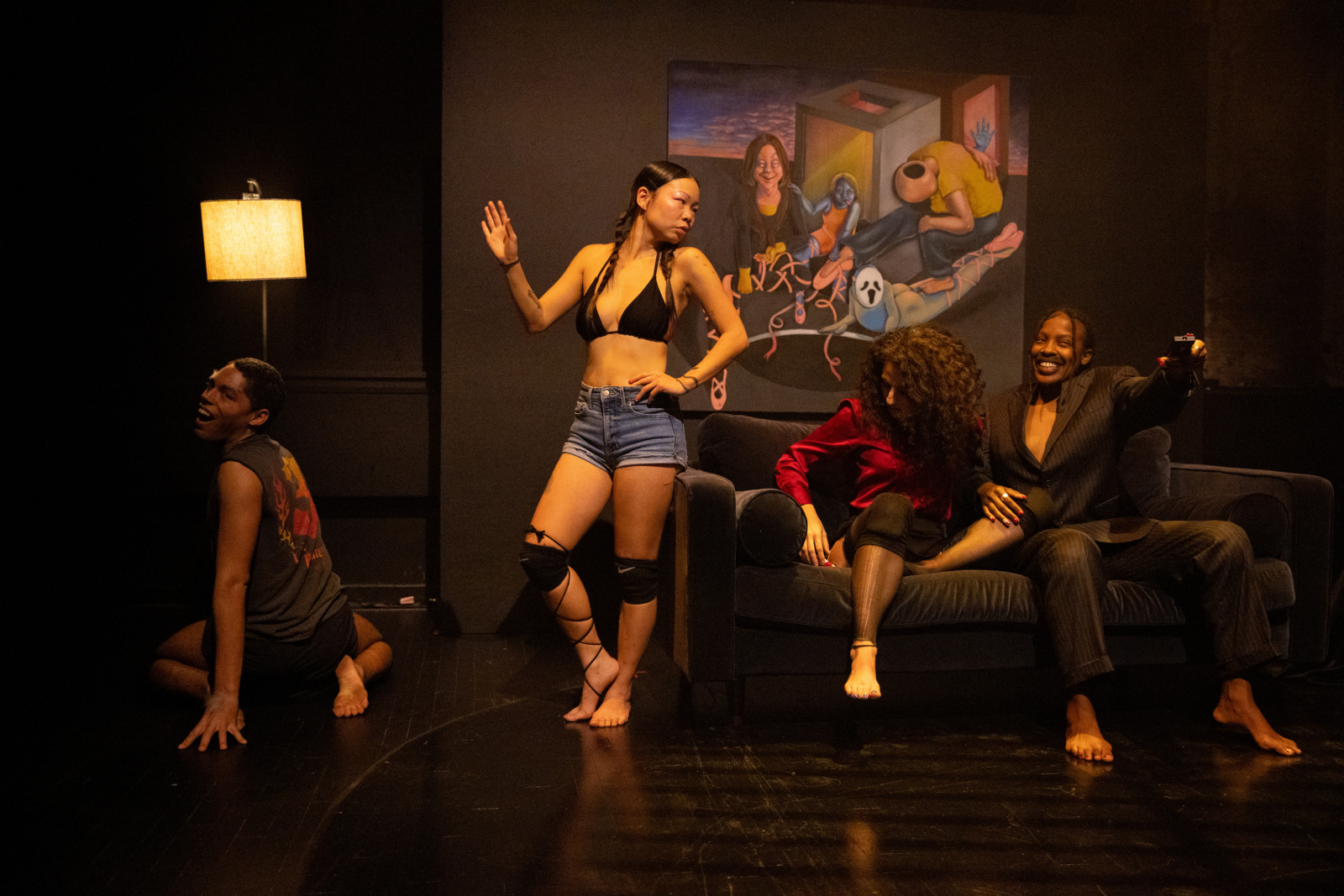
What a lovely introduction. Thank you. Why do I not identify as a dancer? I will start with what I say to the artists that I mentor and what was at the base of the Performance School. I have told myself this and I believe this to be true. Theater is often about representation, dance is about expression, but performance art is about who you are. And it really can't be anything other than that, in my opinion. So I don't say I'm a dancer for that reason. I don't feel like what I make is specifically about expressing myself.
There are so many things that go into the performances that I do. It's more about studying behavior or power dynamics or interpersonal dynamics that look like performance, look like dance, which I then put into what I call ‘putty life,’ where I stretch the authenticity of that stuff. But it's not just dance.
JB
And going back, how did you start your performance practice?
MM
My first performance was actually my senior project in high school. Everyone wrote essays, but I made a film that I called “Film Stills.” That was people being still. It was the first time I really made a performance. I had my whole family and my close friends in it. One was my mom and dad sitting at a coffee table. My dad was painted purple from head to toe, wearing tighty-whities, and my mom was painted yellow in her underwear. They were smoking cigarettes and drinking coffee, and you could only see the smoke moving, but they were still for about a minute.
And there was this scene where a bunch of my friends were all laughing, but nothing was coming out. The feeling of being in this moment where what you're supposed to be doing is not the thing that you're feeling is what I was playing with. All of those things still show up in my work.
I really became a performance artist in college. I went to college for painting, and I was reading a lot of political theory and intellectual history. I found everything to be pretty disillusioning. I dropped out and I went traveling. I joined a traveling anarchist group of people who were trying to shut down the RNC. I worked for a puppet theater, I stayed with soup kitchens and missions, and met a lot of people. Meeting so many people and hearing so many different stories, reading a lot of political history, made me think about the way that we hold information. And the way that that information then affects the way we behave with one another. That's when I really started to want to tell stories with my body. I went back to Baltimore, to MICA, and I started a theater with my friends. We built a theater in our warehouse apartment in the Copycat building.
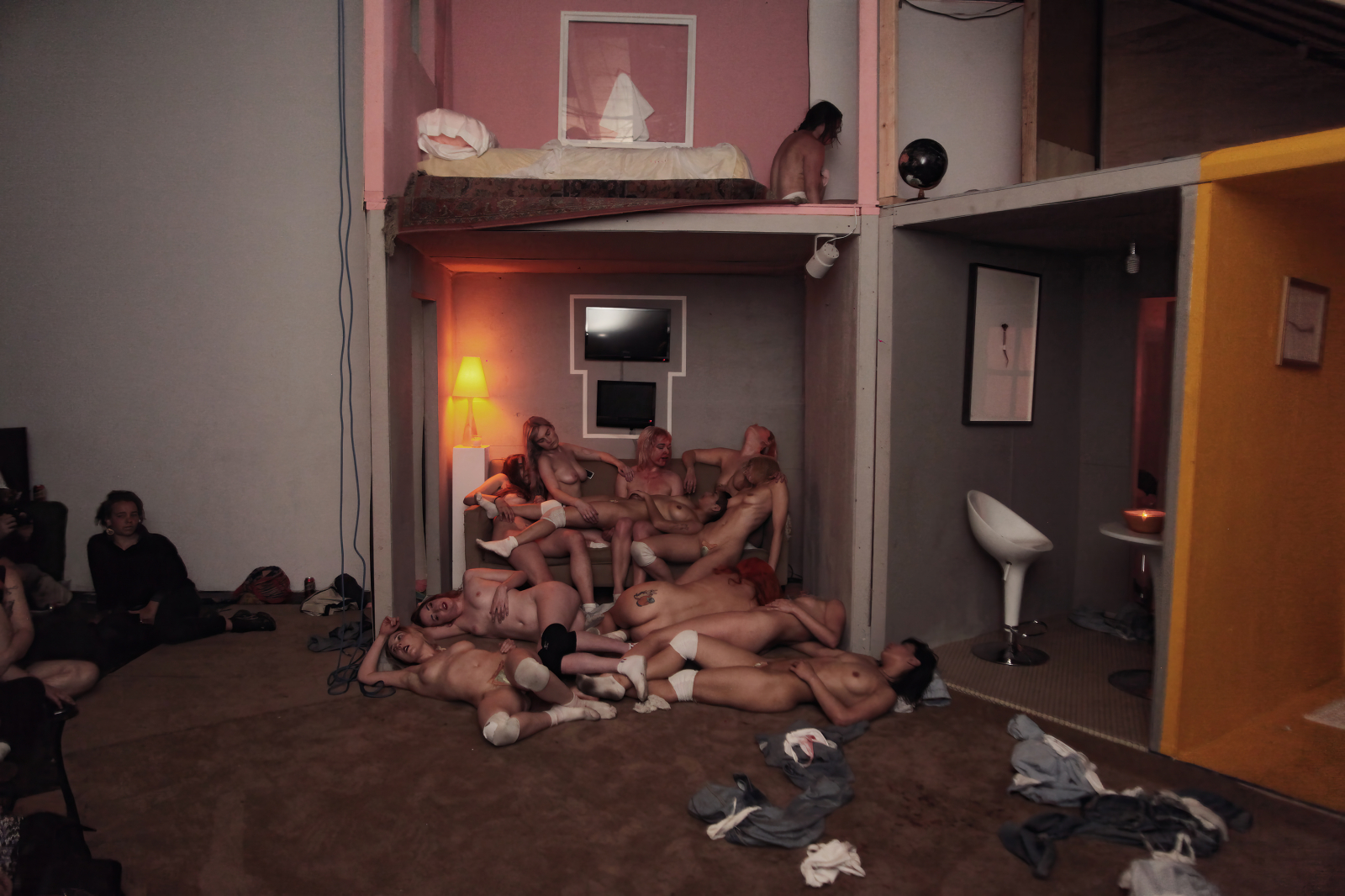
For the first performance, I returned home because I specifically wanted to work with my family members. I had family members who were struggling with addiction. I wanted to create a program for people who had been affected by mental illness or madness and had turned to substances. Because I believed that people were using substances to run away, to ignore, avoid something they were feeling because they felt like they couldn't handle it. One of my family members was still quite young, and I moved her to Baltimore and created this program called “The Wolf Pack,” with my friends. We created a program where you learned how to make music. You read a lot of political history and you danced and you learned how to use your body to tell stories. Ultimately, from learning all of these tools, you would create a performance that was your story.
It makes me emotional to talk about it because I moved that family member to Baltimore to do it. And she was there for about two months. Eventually, she was like, “I can't do this.” And she went home. Then years later she got better and now she's doing really well. But that's how I started making performance art.
JB
I've seen two of your performances and they both brought me to tears. You can feel where you are coming from. This also links to my second question, because as I said before, your practice is and has been so collaborative. You also founded the space Otion Front in 2013 with Sigrid Lauren, where you ran an artist-in-residence program and taught classes and you opened it up as a rehearsal space to the local community. And you were really deeply involved in a project at Performance Space named 02020.
That was initiated by the former director Jenny Schlenka with the aim to place the vision of the artist at the center of the organization, and now you're organizing a performance school. What drives you in seeking and creating these communities?
MM
That’s a loaded question. I'm thinking a lot about love and what that means. I'm not always sure I know what love is, but I do know that the feelings that I'm certain of always resonate around creating community in this way. I feel best when I'm cultivating space or cultivating within permissible space for people to have transformative experiences. Transformation is maybe a shallow word, what I really am interested in is curiosity and discovery. Being curious enough to discover something beyond what we know or what we think we are capable of doing or what we're capable of feeling.
It’s a complex thing. I’m interested in spaces where people are allowed to cross-pollinate, to walk into a room being exactly who they are, and that being a powerful thing or a tool for creating something new. It feels exciting. This performance school is going to be about remembering that you're capable of using what you have and that you don't have to be something else, to make art. It's about agency. It's exciting to be a part of a world like that and to witness it growing. 02020 was similar. It's challenging. None of it is easy, but it is engaging.
JB
We are now sitting in your Times Square studio, surrounded by the paintings that you made over the last few years and over the summer. This is the first time since college you’re focusing on your painting practice. I've been curious how that process has been for you. I'm thinking about the external process, maybe practical, finding a studio. But also internally, connecting to and expanding on this side of your practice.
MM
I was a painter in high school. I loved painting. I was in the AP program, and I was always in the art room. Then I got into college for painting. I think it's always been this thing that allows me to get deeper into my consciousness and my subconsciousness. I started doing sculpture first, and then sculpture very quickly turned into performance. I felt that I didn't need materials, I had my body. That happened, but I returned to painting after my dad died in March 2020.
When I started painting, it was about the return to unveiling information that I didn't have other means to do. With the first painting I made, I wasn't really sure why I was painting it. I have the technical skills because I started back when I was young, but they were still developing. There was a 15-year break, but as I started looking at what was happening, it would just pour out of me and I'd be like, “Oh, that's in relation to this part of my relationship to my dad and my family.”
The information was showing up in that way. It caused me to look at the whole world differently. Performance did this for me as well, but it’s such a different thing where so many moving parts are happening at all times. You have rehearsals, multiple performers, you have to have a studio, you have to get funding to perform the piece. I love performance, that's my heart and soul. But painting is for me something I needed nobody to affirm. I needed nobody to give me permission. I just started looking at light and shadow and color differently. I don't know if you have been in this kind of grief, but when you're in an intense grief state, hopelessness is like your fucking demon that's always on your back. So painting was my savior because I could look at the world as a material again and be like, “oh, it's fucking magical!”
And now, two years or three years later, I'm in the studio in Times Square. The process for me is all about discovering. Even in choreography, the composition reveals itself. It's not something I'm dreaming up and then controlling. It's something that's happening and that is really healing. I love it.
JB
Last time I was in your studio, you invited me over to talk about this new body of work. Much like you, I’m coming from an interest in the body and psychological processes happening within the artist, between the artist and the viewer, and within the viewer. For me, the materiality of an artwork would not necessarily be a starting point of a conversation, and I was wondering if more traditional painting qualities such as brush strokes and texture interest you as much as your probably more unique techniques you must be bringing in from your performance practice. I'm thinking about the way you think about composition, perhaps theatricality, and also the way that you bring your body into the process of painting. Do you feel like you're using some of that language, the same language from your performance practice in your painting practice?
MM
Absolutely. It's directly connected. Because people know me as a performer, they come in and they see the paintings and they're like, “Oh, these are performances.”
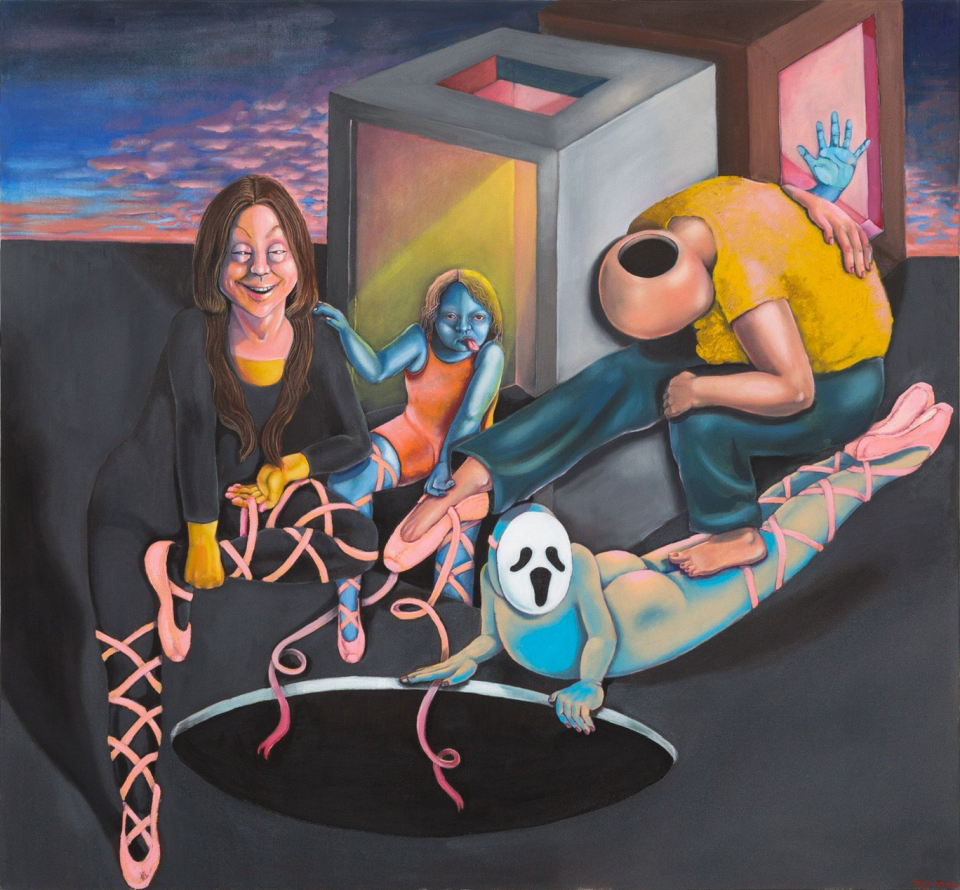
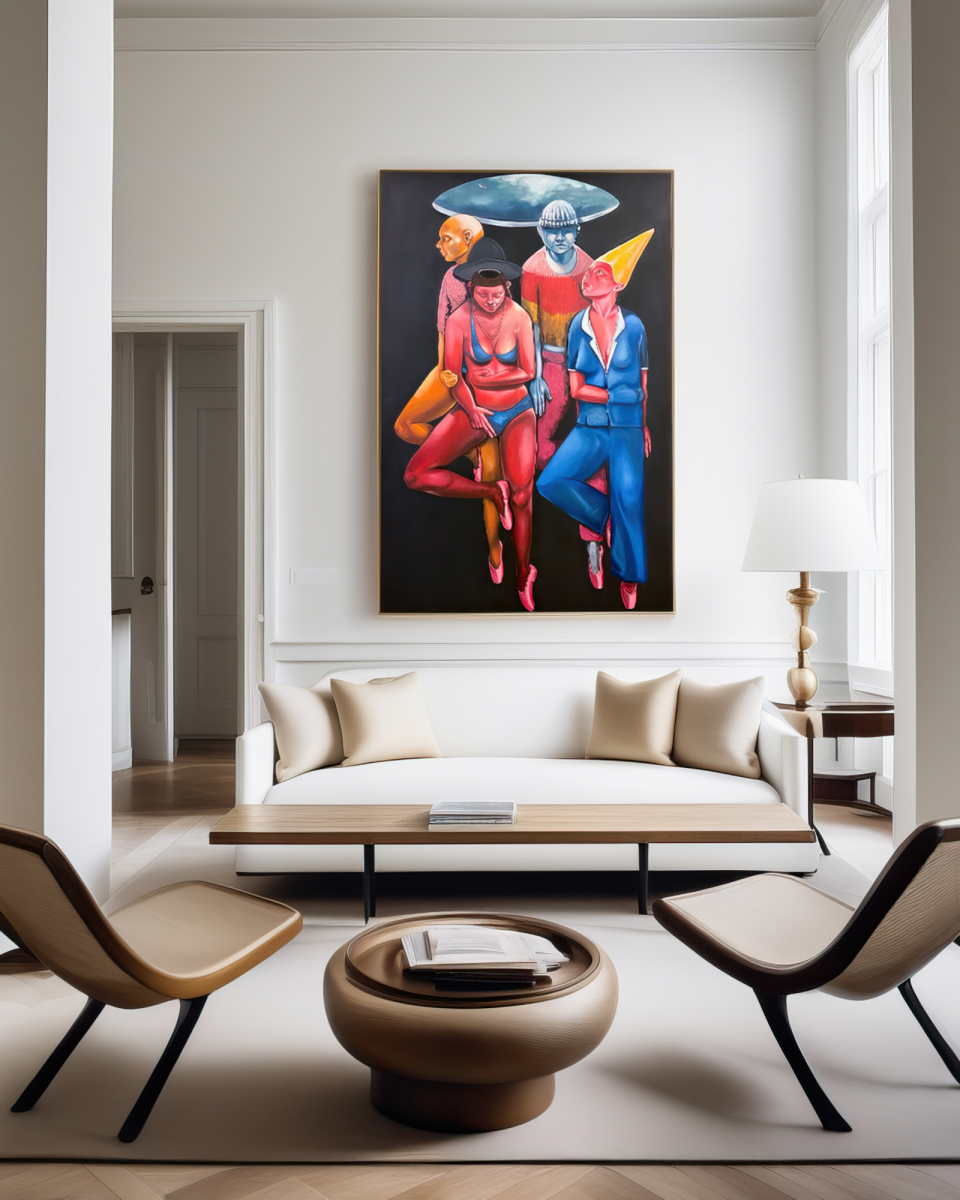
I'm a figurative painter, and I like that. I like bodies. My choreography is very much abject, and so I like creating bodies that are abject in my paintings as well. The connection and support systems that I often talk about in my choreography, I also place in my paintings. There are a lot of shared relationships and techniques. I think I'm indoctrinated with compositions that I've learned from art history. That's still the eye I have, even though it's pretty deeply absorbed and I'm not consciously thinking about it, it is present. That also goes for color and brushstroke and texture making, but even I'm on YouTube. Someone had told me about glazing, which is a technique that I wasn't familiar with, so I was YouTubing glazing techniques. It was very informative. I'm learning new things, and that's a part of the work as well, but it's the same with performance. I'm always learning new things and new techniques.
JB
Last question. You mentioned before that you're working on a new performance commission at the moment. Do you feel like having had this time in your studio painting in the space to dedicate yourself to this is informing, new ways of looking at your choreographic work?
MM
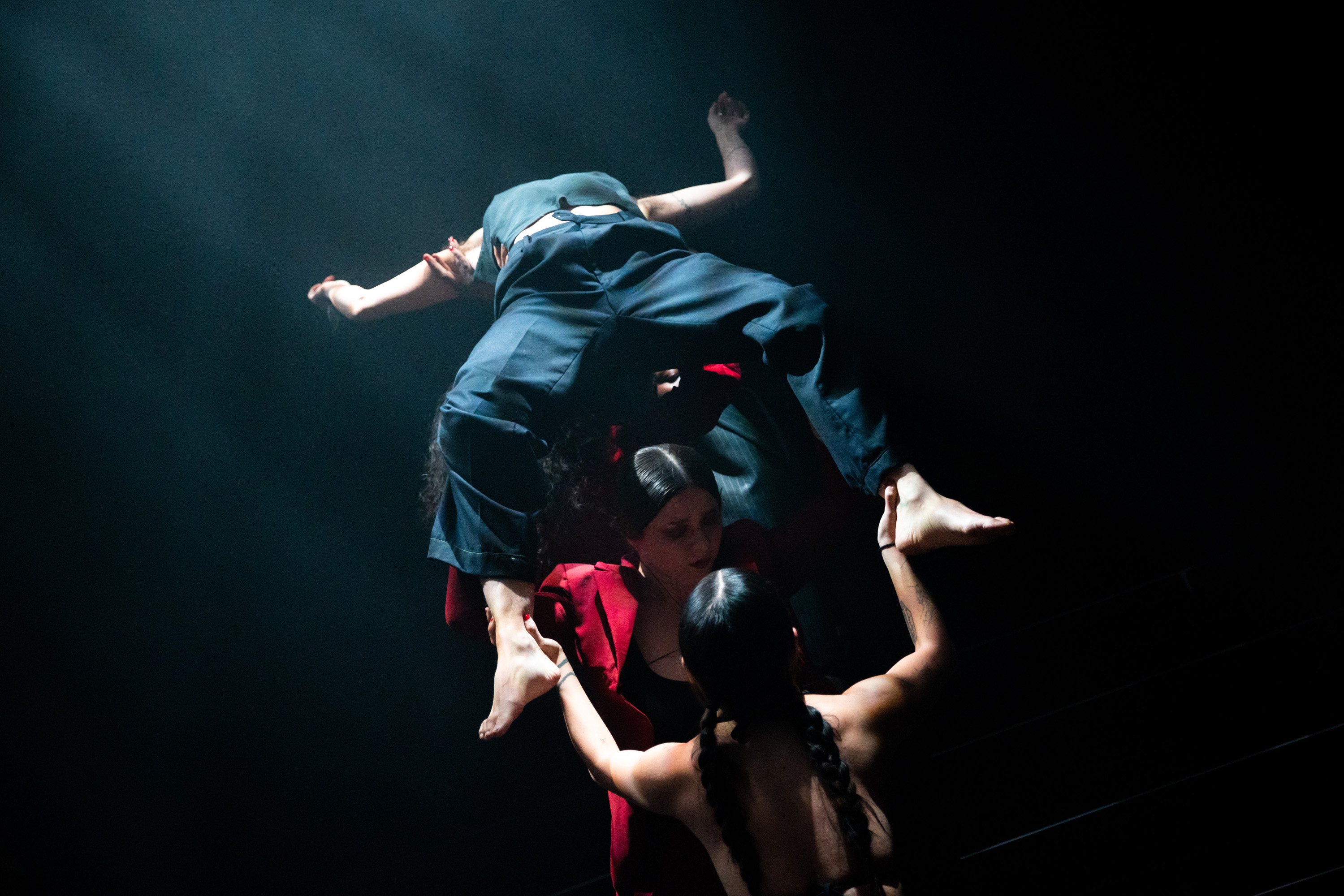
Probably. The painting informed the performance All things under dog, where two things are always true, definitely. There were moments in rehearsals where people were arranged in a certain way, and I would recognize it as the painting.
I'm writing a new performance right now called Paradise Container with Mara McKevitt, and we are developing something that I’m really excited about. Will it be informed by this stuff? Probably. There is a near-death experience, and it's also having to do with addiction. The whole thing is based on very intense character development. That's all I'll say about it right now.
39 E Broadway, 404
New York
info@management.nyc