Menu
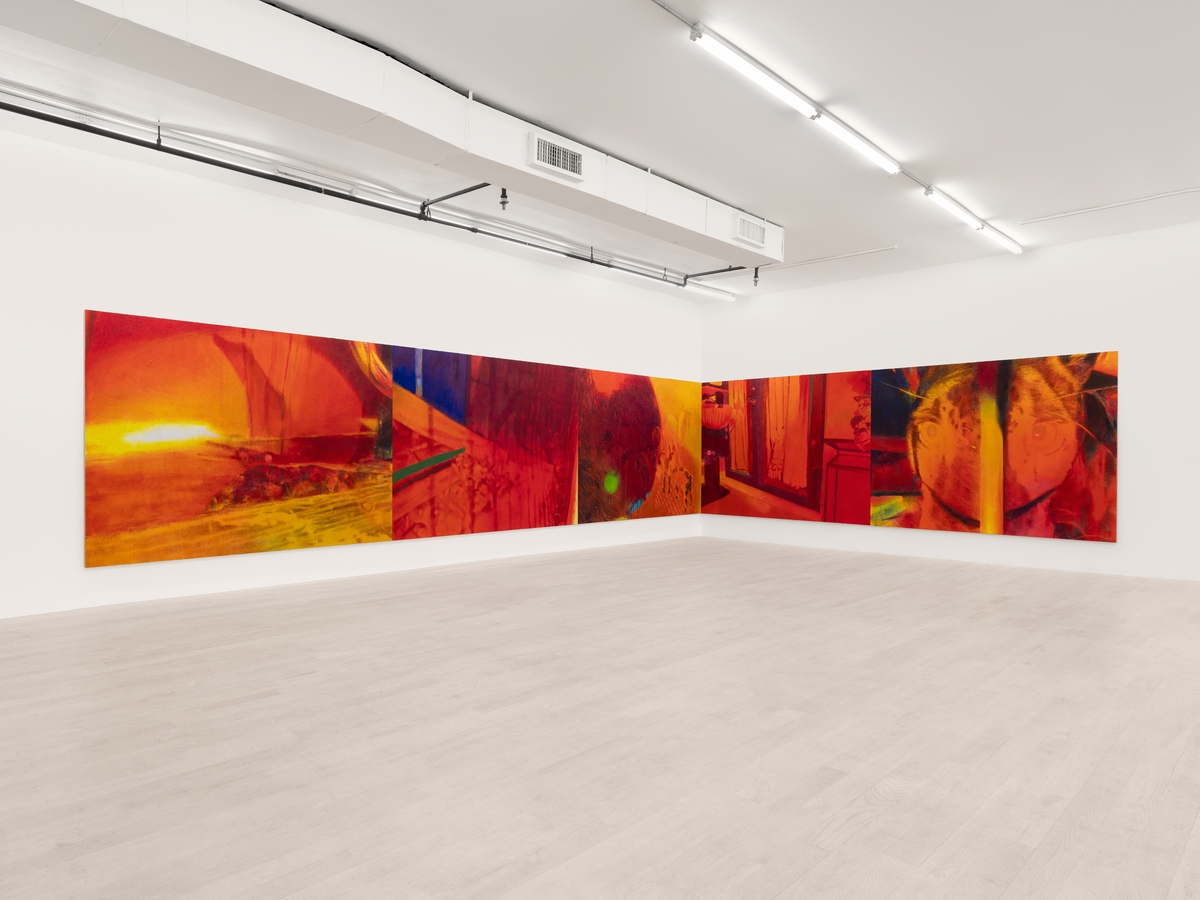
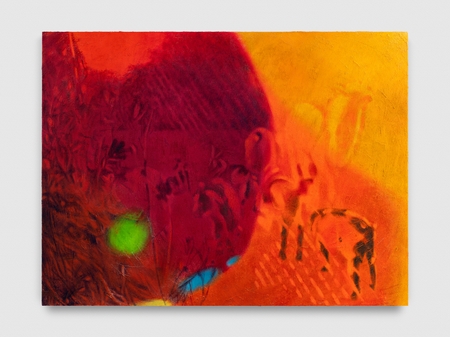
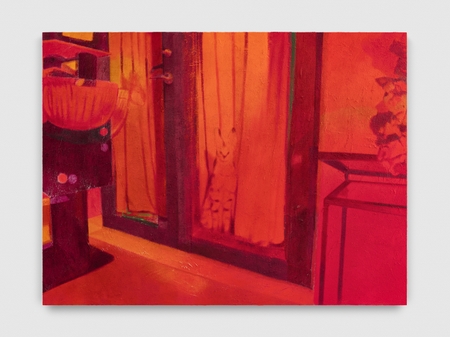
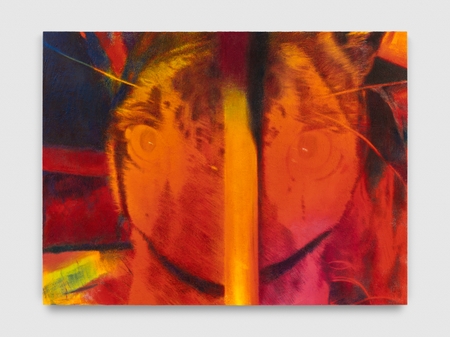
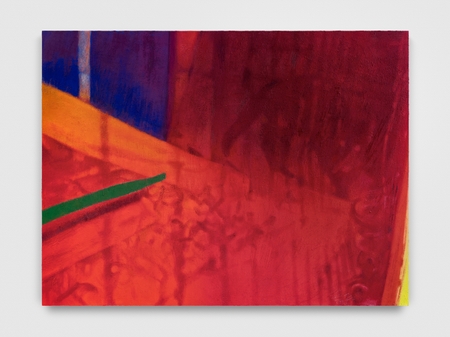
Nana Wolke, Halfway Out to Heaven, 2026. Installation View.
Management is pleased to present Halfway Out to Heaven, Nana Wolke’s second solo exhibition at the gallery. Nana Wolke examines conditions under which desire, power, and control are encountered and staged. Her work originates from prompted actions and unscripted events captured in raw video footage, subsequently split into painting, sound, and installation. Wolke seeks out environments defined by their social, architectural, and psychological charge. Moving between spaces of privilege and marginality, Wolke’s works hold the impermanence of exposure and the thrill of concealment. A text by art critic and curator Guillaume Oranger accompanies the exhibition.
———
Paint. Reorganize meaning. Bring together distant places of the world, make them come to terms with one another. Produce, at times, the proof of a theory yet to be found. Exist as an artist only in the possibility of worldly matters to revert to their place near eventualities: alongside dreams, visions, fractions and fragments of the real, and through a filmed concern for the durational movement of the later-frozen image, trapped in painting. The image, in Nana Wolke’s words, is indeed more persuasive than reality.
Wolke dreams of freedom, probably. Excess. Peace? She may know the power of agitation too well to ever wish for such tranquility, for the suspension of movement. Freedom then, freedom, in baroque quantities, in its affinities with luxury and desire when distilled, in its immemorial ties to domination and control, in its two-faced intimacy with America. The big dream/theft; the big unity/displacement! The famed Americana of tiger owners in Florida, that of Scarface and its psychological horror, sets and displays the trap of violence at all stages and layers.
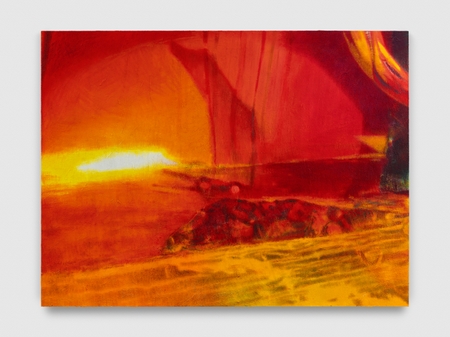
Modal painting, as in modal jazz; one color, a given set of tones; a defined, tight theme. One room, two walls. The ambiguous status of the image plays a defining part in its function and, dare one say, its efficiency: photographic framings, theatrical settings, cinematic zooms. She paints not a vision or an imagined set of circumstances, but something real, thereby detaching it from the real. In the realm of painting per se, is it really true?
It all started with an urge that Wolke pursued to its conclusion, conducting careful research of encaged wildness in Florida, which then became a descent, a downhill road toward painting. Interestingly, animality is the central yet remote concept of the exhibition—remote, because it can only be seen from a distance; it is not exactly lived yet experienceable. Domesticity is therefore given a faithful status: controlled danger, forgotten freedom, remnants of fire, energy seen in the inextricability of its context. Interestingly, such a concept could only have been articulated through semi-closeness, in an interstice, a semi-space, active, yet stationary as it is now; what appears is also balance. The viewer is pulled in no particular direction, or both directions at once (taming/liberation, obedience/revolt); floating or torn apart could have been a suitable subtitle for the exhibition.
Halfway Out to Heaven. In-between things we are. Are we to remain there? Are we still to ask ourselves, Where Do We Come From? What Are We? Where Are We Going?, like Paul Gauguin in 1897-98, while in the presumed heaven of Tahiti, right before attempting to commit suicide? Are we to wait for something–judgment, direction, resolution–in a contemporary purgatory, suspended between this and that, here and there? Maybe we ought to reverse the logic: we are, as it stands, in the cage of judgment, in the cage of vision, moving toward heaven only as things become less and less what we see or think of them, and more and more what is to be known of them—decreasingly substance, increasingly possibility. Wolke performs a tour de force: making paintings about what painting is; not a window, nor a mirror, but something of a paved way, a stretched enclosure—a frame, at last.
— Guillaume Oranger
Nana Wolke, Halfway Out to Heaven, 2026. Installation View.