Menu
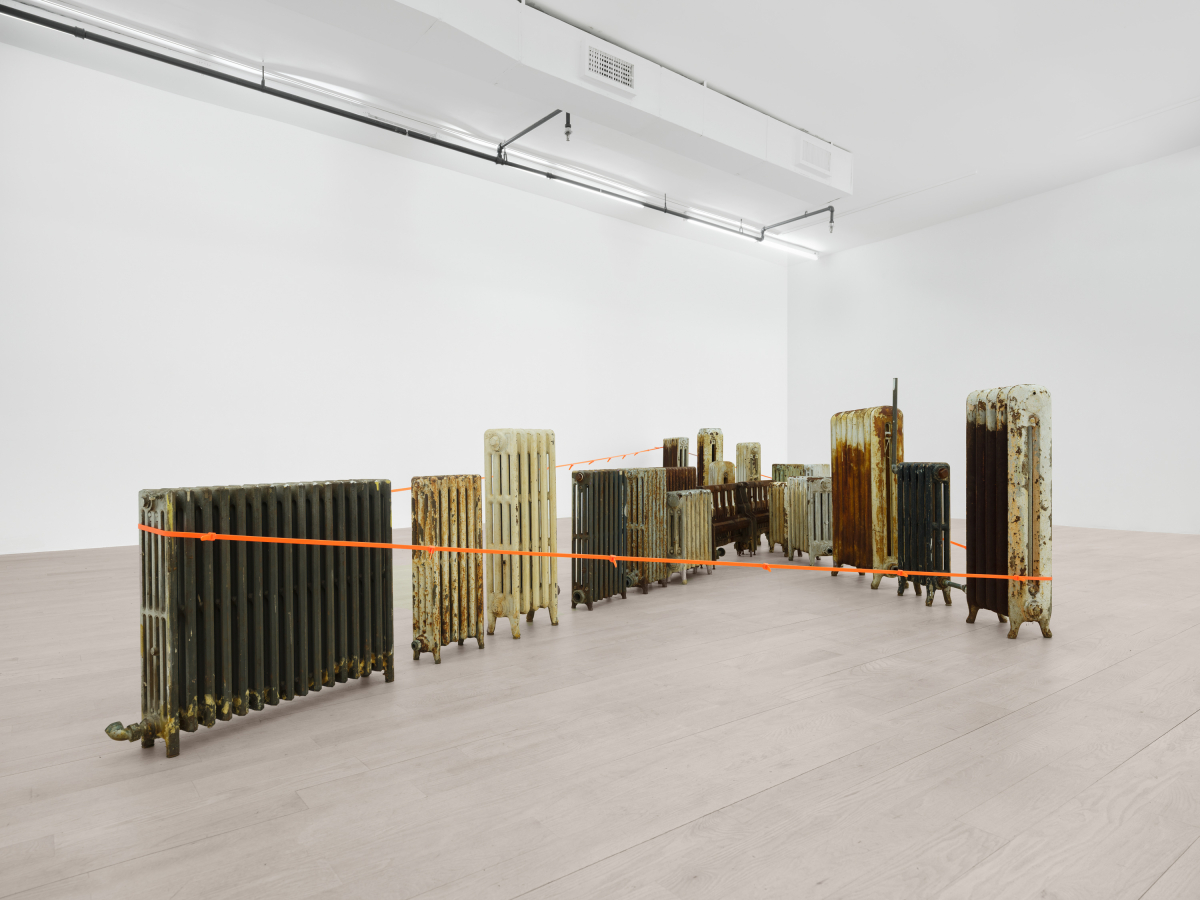
Management is pleased to present Untitled (radiators, zip ties), Bat-Ami Rivlin’s debut solo exhibition with the gallery. Rivlin develops sculptural installations that disrupt and unsettle our habitual relationship to everyday objects. Drawing from locally sourced consumer, domestic, and industrial materials, she constructs improvised yet highly structured assemblages that foreground the charged presence of objects and the social, economic, and linguistic systems that shape how we encounter them. A text by Saskia Hubert accompanies the exhibition.
———
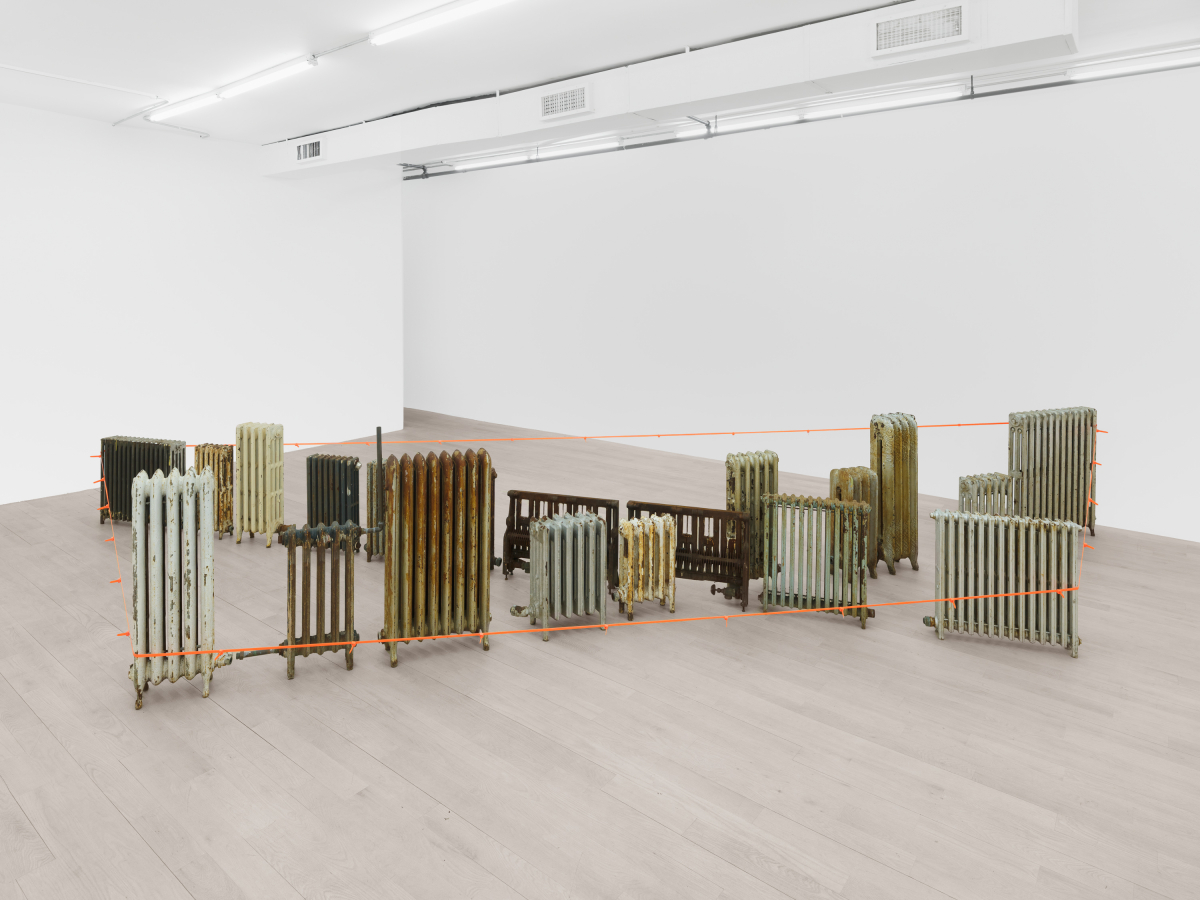
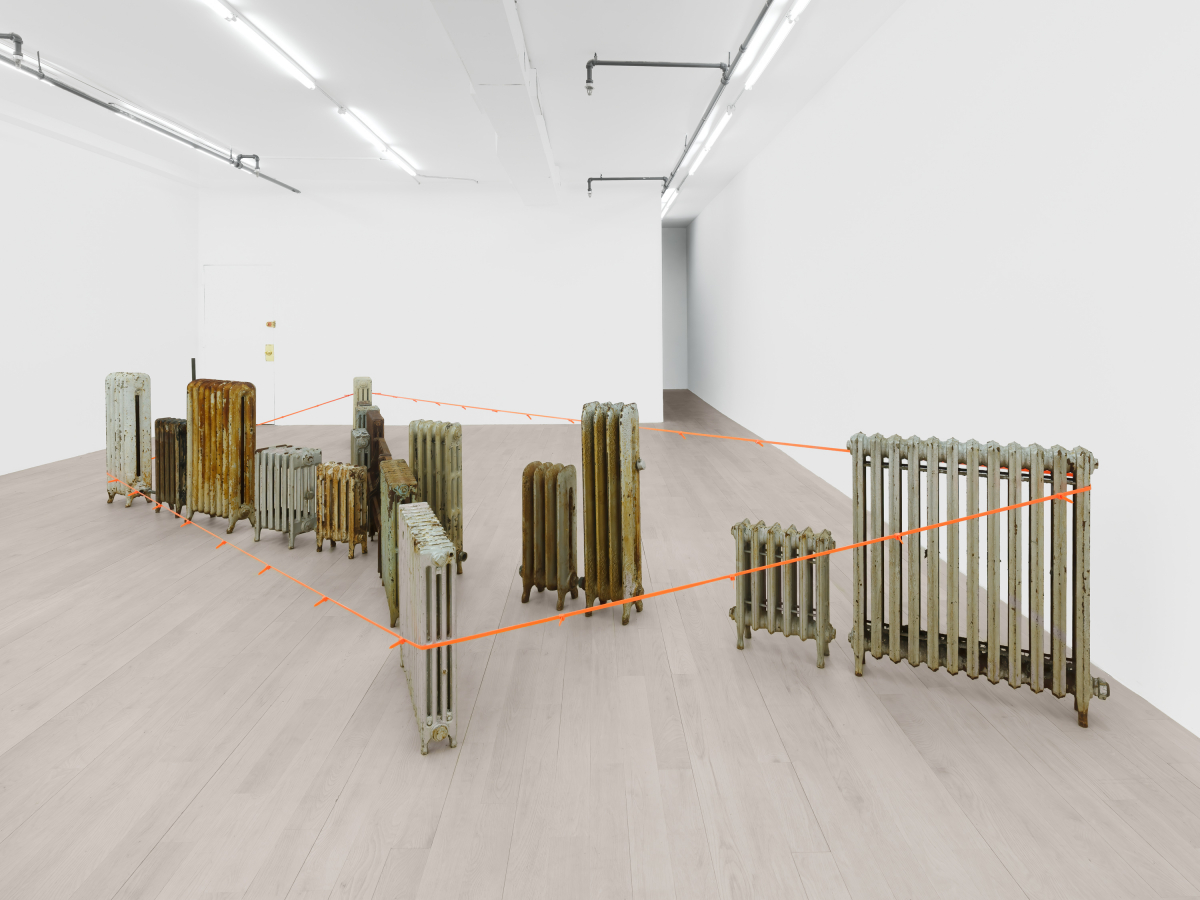
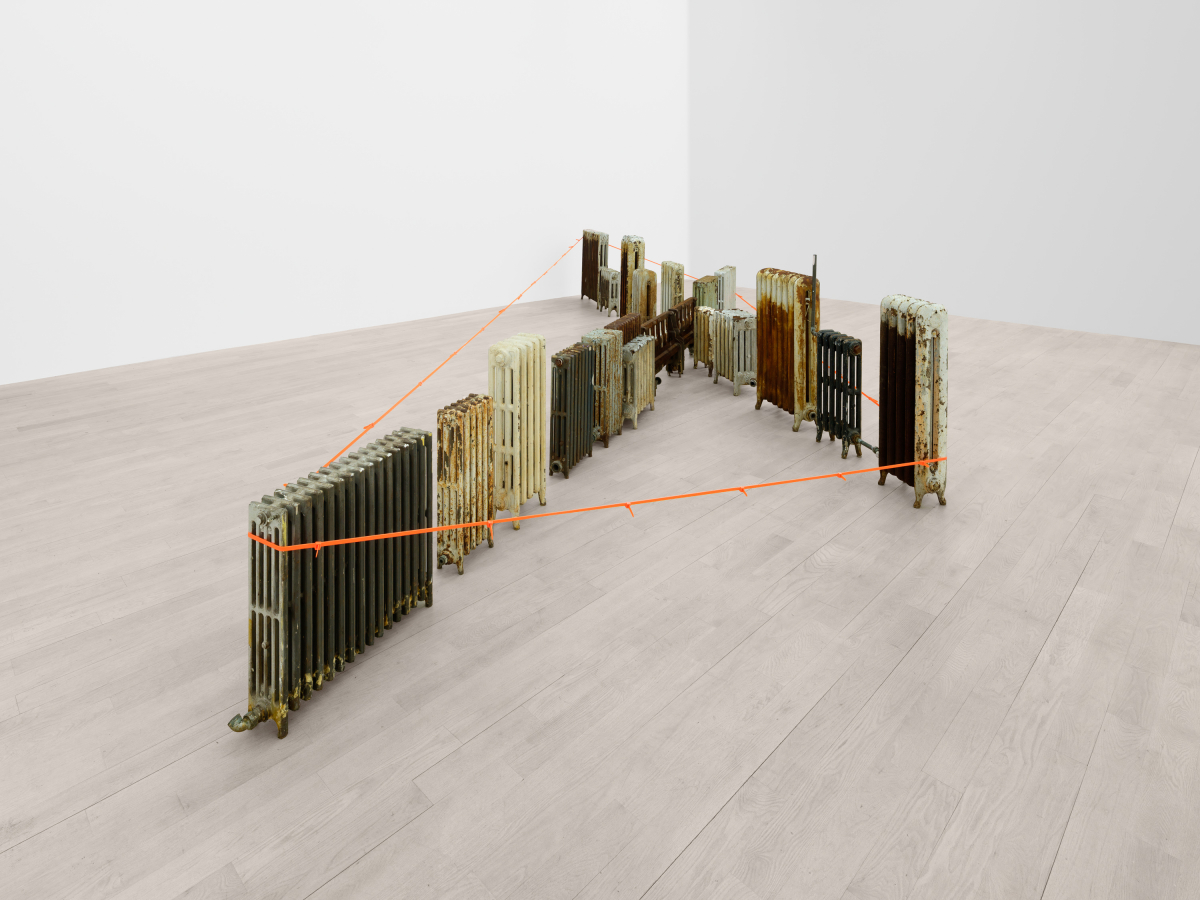
Bat-Ami Rivlin's site-specific installation Untitled (radiators, zip ties), 2026, invites the viewer to step into the space of the familiar and yet understated objecthood. Presented in powerful sparseness, an assembly of locally sourced radiators, encased by zip ties, occupies the gallery space. At first glance, the radiators may appear general, yet their material identity is deeply marked by locality. Deriving from New York City’s architectural strata, their current placement is inherently shaped by the objects’ origins, while the weight of the cast iron becomes indicative of the rootedness at hand. Albeit detached, they remain entangled with their systematic origins of structure, function, and place.
Several of these radiators bear the signs of a century by means of their patinated surfaces, while others quietly embed themselves within the timelessness of their whimsical existence through their monochromatic finish. The zip ties, which surround these radiators, function to delineate territory and inscribe an immediate yet soft distance between the viewer and object, as two species of omnipresence meet within a bounded field.
Across decades, the radiator slowly accumulates the stratified memory of habitation, inscribing itself onto the cast-iron surface and achieving its endurance through durational persistence. This endurance is not passive, the radiator determines where furniture is placed, how bodies gather around the room, and what corners remain unceasingly cold. Existing as a total object, dominated by its unique columnar form, the radiator monuments its own intent, remarking upon the immediate recognisability for us as viewers, while formal clarity unfolds as the direct relationship between form and purpose. The zip ties, by contrast, proliferate through sheer multiplication. Disposable, but simultaneously everywhere at once, deterministic of budget and provisional solutions.
Both objects, in their different temporalities, prescribe the reality around them, dictating what possibilities exist within the domestic spaces they occupy. As time becomes spatial, the cast-iron radiators function as carriers of long-duration time, persisting through decades of use, changing inhabitants, and renewal of interiors, remaining fixed whilst surrounding elements shift, shaping how space organises itself around us. Meanwhile, the zip ties introduce a counter-temporality, operating as carriers of short-duration time and defined by a sense of urgency in the wake of the immediate solution, repeated countless times across varying scenarios and spaces.
It is through these different temporalities, that the vitality of each object’s matter foregrounds the operative as opposed to the symbolic. Asserting itself through material action such as the capacity to heat and regulate, and simultaneously to bind, fix, and restrain. Rivlin’s installation highlights and challenges the object’s dynamic modus operandi as it exists across spatial, systemic and political hierarchies. It deliberately stages the object's continued operation to remain visible, holding function in the foreground as something neither neutral nor incidental. In doing so, Untitled (radiators, zip ties), 2026, draws attention to the quiet authority through which everyday materials persist, organise, and regulate the space in which we live. What emerges is an attentiveness to how such objects continue to structure environments long after their presence has ceased to be remarkable, shaping the terms of inhabitation through use, endurance, and repetition.
— Saskia Hubert
Bat-Ami Rivlin is a New York-based sculptor working primarily in found and surplus objects. Notable exhibitions include Boat, Plastic, Tire, L21, Spain (2023-24); Simple Sabotage, Kunsthal NORD, Denmark (2023-24); The Socrates Annual, Socrates Sculpture Park, NY (2023-24); COLAPSO, Tenerife Espacio de las Artes, Spain (2022); EN-SITIO, Museo de la Ciudad de Querétaro, Mexico (2022); whereabouts, Hessel Museum of Art, CCS Bard, NY (2022); No Can Do, M23, NY (2021); and more. Rivlin’s work was featured in publications such as Artforum, BOMB, Brooklyn Rail, Flash-Art, Emergent magazine, Artnet, PIN-UP, Office Magazine, The Paris Review, Public Parking, and more. Rivlin holds an MFA from Columbia University. She is the recipient of the Monira Foundation Residency, Sculpture Space Residency, Socrates Sculpture Park Fellowship, A.I.R. Gallery Fellowship, among others.